
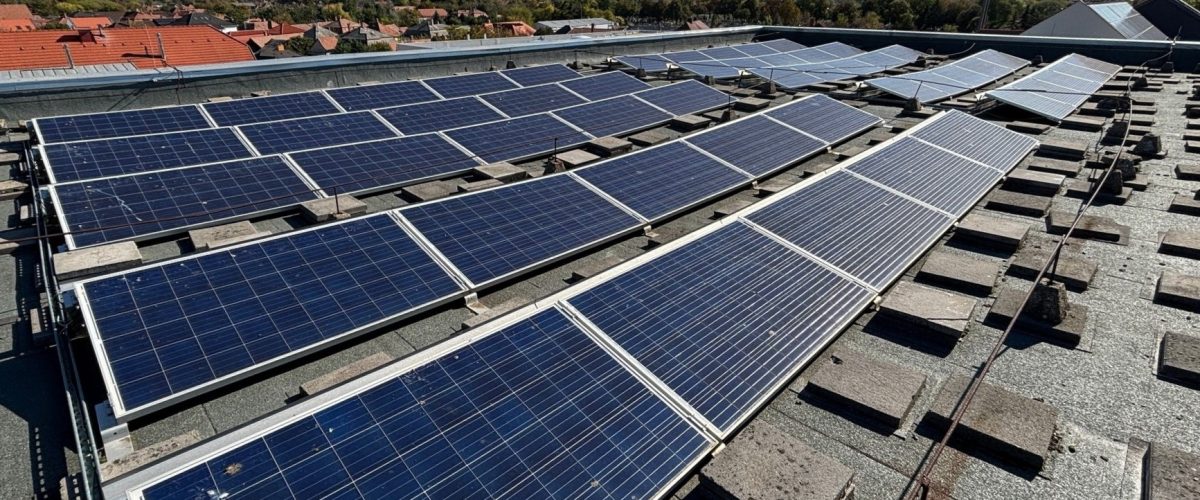
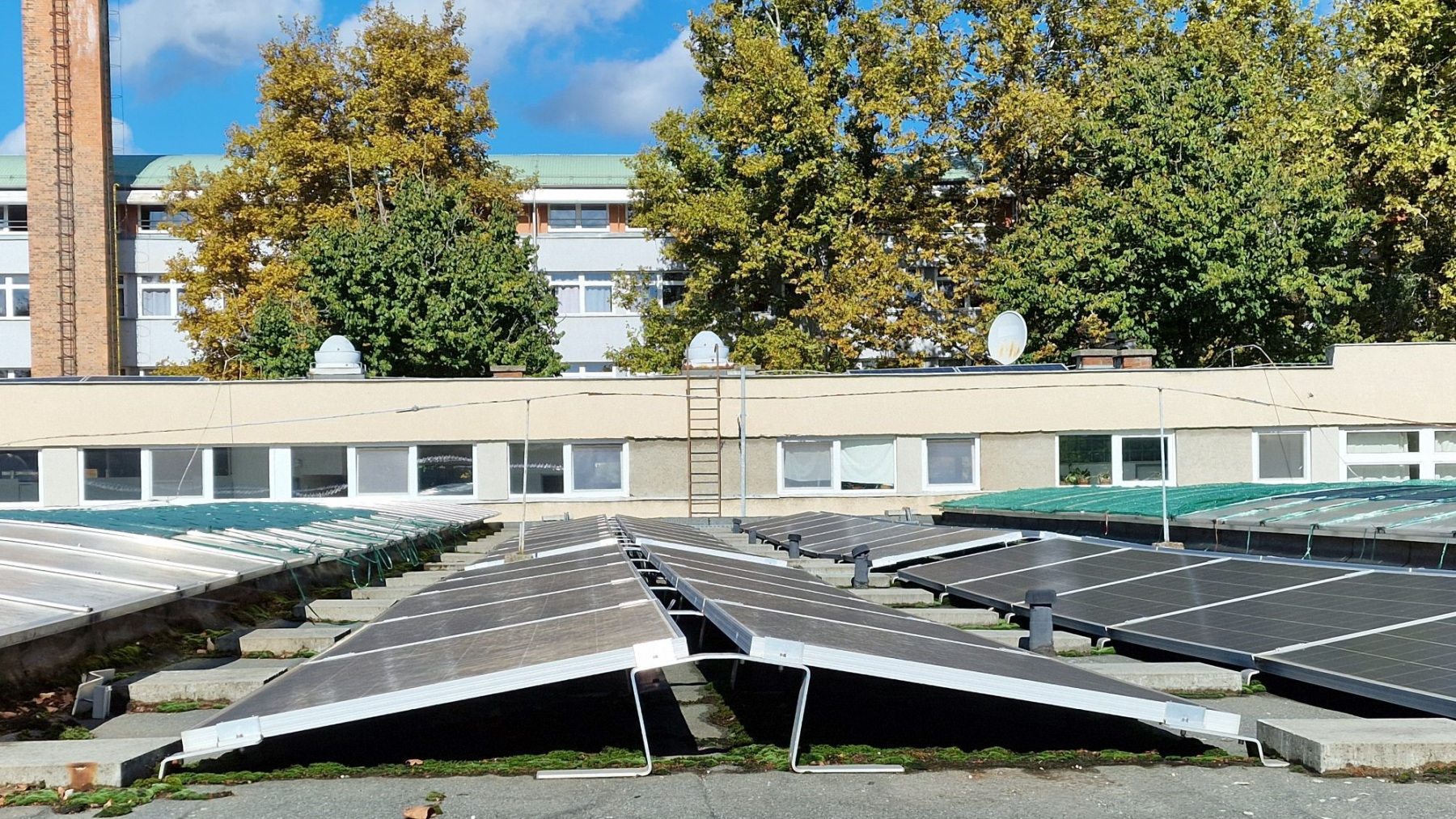
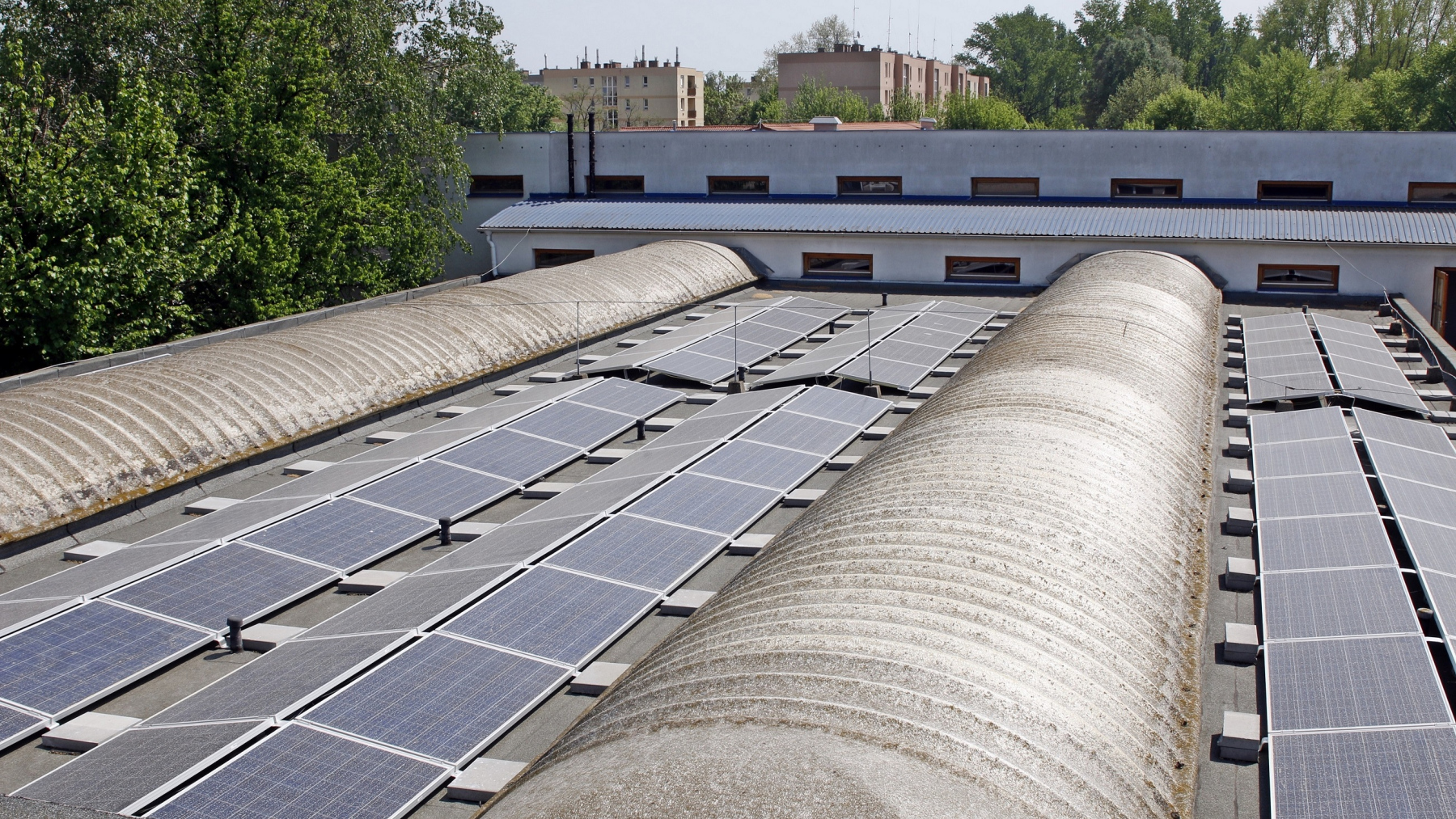
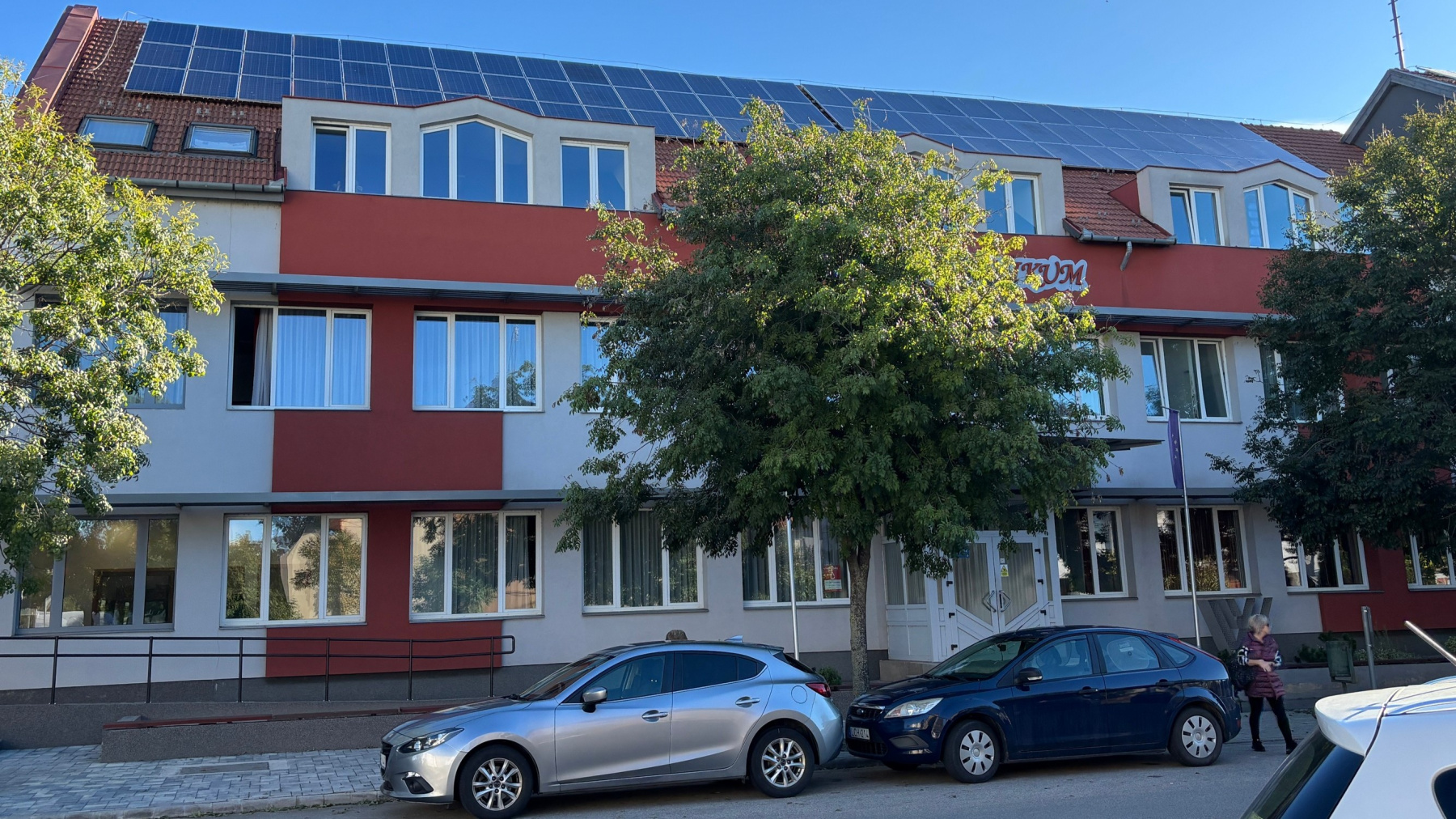
The morning bell rings, students take their seats, and teachers begin their lessons. But there are some particularly hardworking members of these schools that need neither a timetable nor a school bell. They get to work as soon as the first rays of sunlight appear, tirelessly generating energy whenever the weather allows. Across the institutions of the Kiskunhalas Vocational Training Centre, 828 rooftop solar panels turn sunshine into something truly useful.
Anyone who thinks a school’s energy consumption amounts to little more than switching on a few lights might be surprised by what goes on behind the scenes. Computers hum in classrooms, corridors are brightly lit, machinery operates in training workshops, and offices rely on electrical equipment throughout the day. Running an educational institution requires a considerable amount of energy. That is why the Kiskunhalas Vocational Training Centre decided to turn to nature to help reduce its electricity bills.
Three towns joined the effort to harness the power of the sun. In Kiskőrös, 248 solar panels were installed across three sites of the Wattay School. In Kiskunfélegyháza, another 376 panels were fitted to the buildings of the Kossuth Lajos Vocational School and the Secondary School of Economics, while 202 panels were installed on the roof of the Dékáni Árpád School in Kiskunhalas. Thanks to European Union funding, solar power systems with a combined peak capacity of over 223 kilowatts were installed across six sites belonging to four member institutions of the Kiskunhalas Vocational Training Centre.
But what exactly do these hundreds of gleaming rooftop panels do? Their job is remarkably simple yet effective. They convert sunlight into electricity that the schools can use to power their everyday operations. Classroom lighting, computers and other school equipment can now run partly on solar energy. Of course, the sun does not follow a school timetable. It takes things a little easier on cloudy days and clocks off at night, but whenever it shines, it helps keep the schools running.
The greatest benefit of the investment is the reduced need to purchase electricity from the grid. According to the project’s estimates, the systems could generate around 230,000 kilowatt-hours of renewable electricity annually, avoiding approximately 210 tonnes of carbon dioxide equivalent emissions.
There is another reason why this investment is particularly well suited to an educational setting. Sustainability can be taught through textbooks, lectures and classroom assignments, but seeing it in action at your own school is an entirely different experience. The rooftop solar panels serve as a daily reminder that environmental responsibility is far from an abstract concept. It is a practical approach that can make a real difference in everyday life.
While students prepare for their future, the school buildings themselves are contributing to a more sustainable one. In these schools, sunshine now means more than just good weather – it brings a little extra energy to every school day.


The development was implemented from EU funding in the project KEHOP-5.2.11-16-2017-00141 under the Environmental and Energy Efficiency Operational Programme.
Find out more about the project in the Project Finder:Details