
Imagine rushing to catch a bus on an ordinary day when suddenly a terrible pain shoots through your abdomen. An ambulance takes you to hospital, where a doctor carefully examines you. His tone turns serious. He suspects a major abdominal blood vessel injury and orders an ultrasound scan. You ask whether it’s dangerous, and he gives you an honest answer – very. But he also explains that surgery could save your life. At a moment like this, it can feel as though everything depends on the operating room waiting for you.
For many people in Hungary living with heart and vascular diseases, the Gottsegen György National Cardiovascular Institute offers hope. As a comprehensive cardiovascular centre, it provides the highest level of specialist care for adults and children with heart and blood vessel conditions, covering both emergencies and planned procedures. Some of these treatments are available nowhere else in Hungary. The institute is ready to handle the most complex cases 24 hours a day, seven days a week, serving patients from its own region and, when necessary, from across the country.
Maintaining such a high standard of care requires modern facilities and equipment. An EU-funded project helped the institute take a major step forward, with the creation of two new operating rooms at the heart of the investment.
One of these is a hybrid operating room, a specially equipped space where surgeons can combine traditional surgery with catheter-based procedures using advanced X-ray imaging. This means that a wide range of vascular and heart valve conditions, as well as congenital heart defects in children and adults, can be treated in the same room. Doctors can perform both surgical and catheter-based procedures without having to move the patient to another operating room. The facility is in regular use, helping two or three patients a day, with demand continuing to grow.
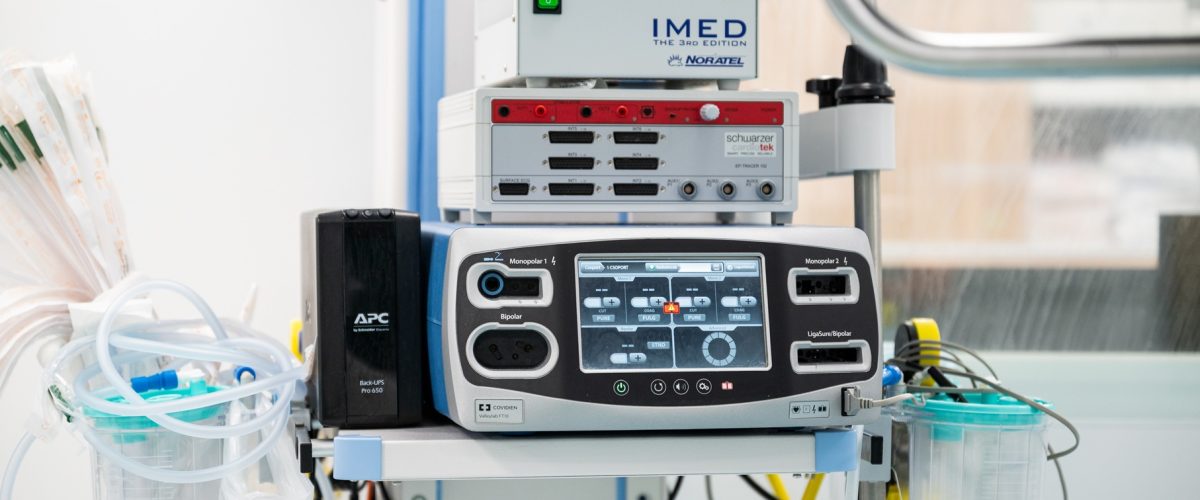
The new hybrid operating room is equipped with a range of advanced medical technologies. These include a hybrid angiography system, a peripheral digital subtraction angiography (DSA) system and a 4K medical camera system. The project also provided a new operating table, a mobile C-arm imaging system, a heart-lung machine, radiation protection equipment, a telemetry system, an intra-aortic balloon pump and a portable intravascular ultrasound system. Together, these tools help medical teams carry out complex procedures more safely and efficiently.
The improvements did not end with the hybrid operating room. The project also funded a second operating room designed for catheter-based procedures involving peripheral blood vessels. This is particularly important for patients at risk of losing a limb because of conditions such as diabetes. Doctors here work to reduce the number of amputations by treating circulation problems, sometimes performing several peripheral vascular procedures in a single day.
The investment also included a wide range of additional medical equipment, including an electrophysiology diagnostic system, a blood warmer, a pharmaceutical refrigerator, an obstetric and gynaecological ultrasound system, Holter ECG monitors, surgical instrument sets and operating lights. The funding also covered the construction, alteration and renovation work needed to accommodate the new facilities, along with the necessary technical supervision.
Thanks to EU funding, the Gottsegen György National Cardiovascular Institute now has operating rooms and medical equipment that match the world-class expertise of its specialists. But the true value of the investment goes far beyond modern technology. It lies in the reassurance that, if we or someone we love ever needs urgent heart or vascular surgery, the institute can offer the best possible conditions for treatment and recovery.
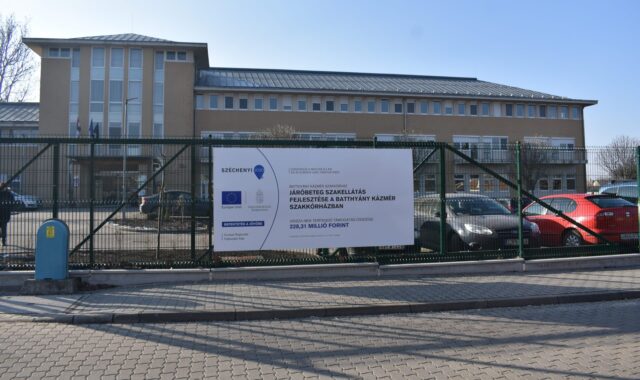
The development was implemented from EU funding in the project EFOP-2.2.22-20-2021-00001 under the Human Resource Development Operational Programme.
Find out more about the project in the Project Finder: Details