
Have you ever looked down at the beautiful, smooth stone tiles on your bathroom floor and wondered where they came from? It might be hard to imagine, but they started life as rough blocks of natural stone. So how does something so rugged become a stylish, polished surface that adds elegance to our homes?
Süttői Travertin Kft. specialises in quarrying and processing limestone. The company had already upgraded its stone-cutting equipment, but growing demand for polished tiles meant it needed to modernise other parts of its production process as well. These tiles are especially popular for interiors, thanks to their elegant appearance and smooth finish. They also have a higher market value than untreated stone, making them an important part of the company’s product range.
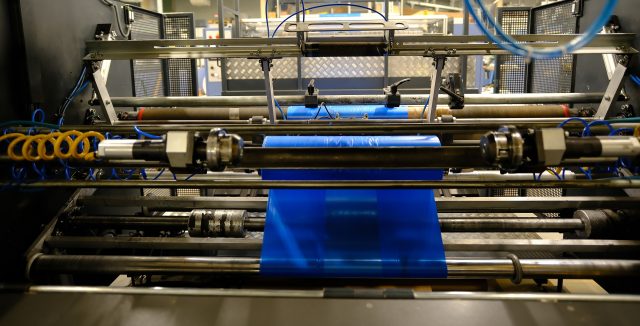
With the help of EU funding, the company invested in new machinery to make production faster and more efficient. A high-performance polishing machine was installed to give limestone and marble slabs a smooth, even finish, while a new block-cutting machine made it easier to cut raw stone into the right sizes for polishing. Because stone processing uses large amounts of water, the company also introduced a drying system to remove moisture more quickly and speed up production.
Moving and organising the heavy finished slabs became easier, too, thanks to new forklifts and a powerful wheel loader. The company also found ways to make better use of its raw materials. Limestone that cannot be turned into tiles is processed into crushed and graded decorative stone, reducing waste and creating additional products.
The improvements went beyond machinery. A new business management system was introduced to help the company plan production, monitor operations and keep track of each stage of the manufacturing process. This made day-to-day operations easier to manage and improved overall efficiency.
By upgrading several key stages of production, Süttői Travertin Kft. has made the journey from rough stone to finished tile smoother and more efficient. The investment has also allowed the company to expand its product range and respond more effectively to growing demand for polished stone products.
The development was implemented from EU funding in the project GINOP-1.2.1-16-2017-00765 under the Economic Development and Innovation Operational Programme Plus.
Find out more about the project in the Project Finder:Details