

Deep beneath our feet, the Earth is simmering. Heat from the planet’s ancient core combines with heat generated by radioactive decay. The deeper we go, the hotter it gets: temperatures rise by roughly 30 degrees Celsius with every kilometre of depth. If we can bring this virtually inexhaustible heat to the surface, even the coldest winter days become much easier to face.
This valuable source of energy had been lying beneath Lenti all along. Thermal water was discovered in the town in 1970 and was later officially recognised for its medicinal properties. But the heat hidden underground could offer much more than a pleasant bathing experience. With the help of European Union funding, the town set out to convert the heating systems of ten public institutions from natural gas to geothermal energy.
A key element of sustainable urban management and development is enabling towns and cities to meet more of their needs by making use of local resources and conditions. When such locally based solutions also extend to energy systems, they can bring both environmental and financial benefits to the community.
The project was implemented by a consortium of the local governement of Lenti town and Lenti Városgazdálkodási Kft. A new production well was drilled, a reinjection well was developed, a pump house and buffer tank were installed, and more than three kilometres of pipelines were constructed. The system connected ten institutions to the district heating network.
Hot water is brought to the surface from a depth of around one and a half kilometres through the new production well. At the wellhead, the water has a temperature of approximately 68 degrees Celsius and a flow rate of more than 500 litres per minute, or over 30,000 litres per hour. This provides sufficient capacity to supply the buildings connected to the system. Once the water has transferred its heat, it is reinjected deep underground to protect the aquifer. Even at this stage, the returning water is still around 50 degrees Celsius, helping to ensure that the system can operate sustainably, economically and reliably over the long term.
| Geothermal energy is a renewable source of energy derived from the Earth’s internal heat. Extracting this resource is relatively inexpensive, while using geothermal heat does not cause direct air pollution. Geothermal energy can be used for heating, agricultural purposes and electricity generation. On a human timescale, the Earth’s internal heat represents an essentially continuous source of energy, although the responsible use of thermal water resources and the reinjection of cooled water are essential to ensuring long-term sustainability. |
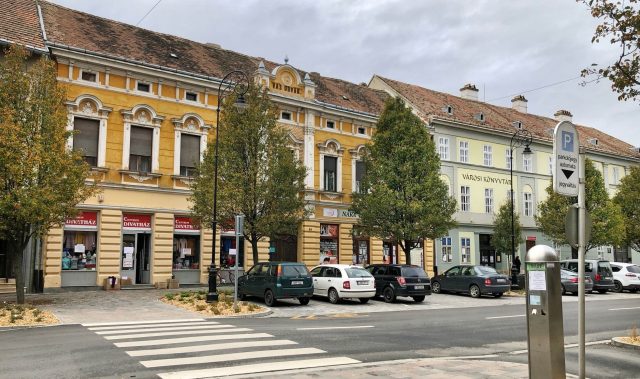
The institutions connected to the geothermal network are Arany János Általános Iskola, Dr. Hetés Ferenc Szakorvosi Rendelőintézet, Városi Művelődési Központ és Városi Könyvtár, Polgármesteri Hivatal, Gönczi Ferenc Gimnázium, the two sites of Mesevár Óvoda, Vörösmarty Mihály Általános Iskola, Lenti Járási Hivatal and Lámfalussy Sándor Szakképző Iskola.
The new heating system therefore offers both environmental and economic advantages over gas heating. Running the pumps, replacing filters and maintaining the network naturally involve costs, but overall the new system has resulted in lower heating expenses and a more predictable local energy supply.
Geothermal heating is considered a technology with a relatively short payback period, averaging around five years. Taking its sustainability and environmental benefits into account as well, harnessing the heat stored deep beneath the ground represents a valuable technological improvement for the town.
The development was implemented from EU funding in the project TOP-3.2.2-15-ZA1-2016-00008 under the Territorial and Settlement Development Operational Programme.
Find out more about the project in the Project Finder: Details