
For centuries, the playfully meandering Mura River has not only traced one of the most whimsical borders between Hungary and Croatia, but also shaped a natural environment that is among the country’s most valuable in terms of both soil quality and biodiversity. Over time, however, human activity put this delicate balance at risk—calling for responsible intervention.
Flowing along the southwestern edge of Zala County, the river once created and reshaped sandbanks, oxbow lakes, and islands through its periodic floods. This constant change gave rise to a unique, mosaic-like floodplain landscape built on the fragile balance of forests, grasslands, and wetlands. Preserving this exceptional environment was the central goal of a development project implemented by the Balaton Uplands National Park Directorate with EU funding.
Carried out during the 2014–2020 EU budget period, the project became one of the region’s most successful nature conservation initiatives. It aligned with the objectives of the funding call by improving the conservation status of habitats and species of Community interest, particularly within Natura 2000 areas.
Although the Mura floodplain had long been protected as part of the Mura–Drava–Danube Biosphere Reserve, the decline of traditional land use over recent decades caused serious problems. The abandonment of mowing and grazing led to shrub encroachment and afforestation of grasslands, while invasive non-native species spread. Biodiversity declined, and the floodplain’s natural water-drainage capacity deteriorated—developments that directly contradicted conservation management plans and made intervention unavoidable.
The project therefore adopted a comprehensive approach. Its aim was to restore floodplain habitats shaped by traditional extensive land use, improve habitat quality, strengthen declining plant and animal populations, and establish a sustainable long-term management model. The key to this was reintroducing traditional grazing practices that had shaped the landscape for centuries.
Extensive land use is a low-intensity farming method that works with natural conditions and requires minimal inputs. It relies on grazing and mowing, avoids fertilizers and chemicals, and prioritizes biodiversity conservation. Typically applied over large areas, it offers an environmentally friendly, long-term balance between agriculture and nature protection.
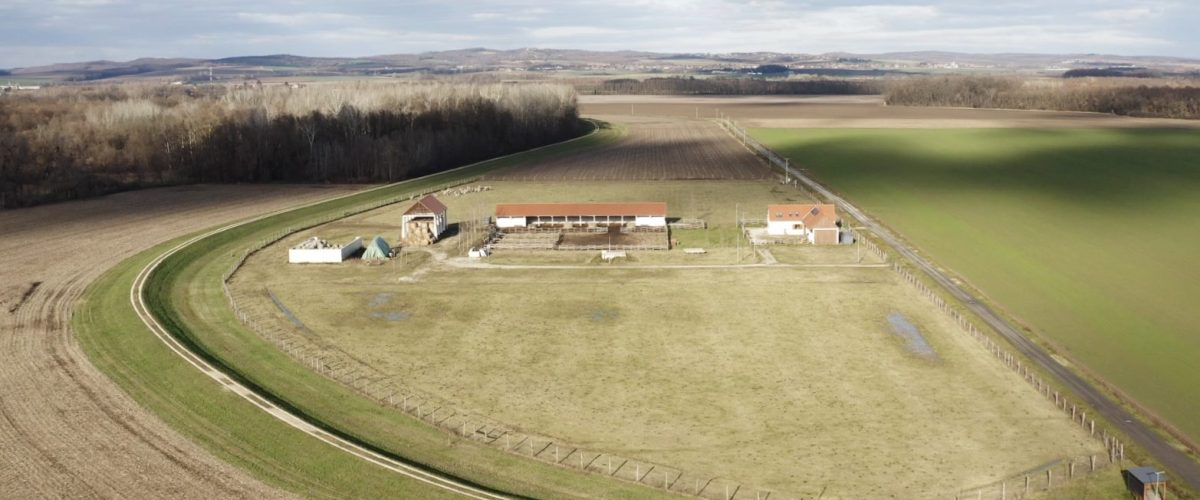
As part of the development, overgrown and wooded grasslands were restored, aggressively spreading invasive tree species were reduced, and several areas were renewed with more natural, native vegetation. Near Letenye, a livestock management center was established to house Hungarian grey cattle. This infrastructure proved essential for reintroducing grazing on a scale large enough to deliver real conservation benefits.
The project also considered public access and education. Around the new farming center, a 3.5-kilometer nature trail was created, allowing visitors to explore floodplain habitats, wooded pastures, and the principles and importance of traditional free-range livestock keeping. In this way, environmental awareness becomes a tangible, hands-on experience.
The Mura floodplain project demonstrates that development does not always mean transformation or redesign. In many cases, it means preserving what already exists. Through traditional grazing, habitats were revitalized and a fading land-use culture brought back to life—proving that nature conservation and traditional knowledge together can offer a compelling vision for the future.
The development was implemented from EU funding in the project KEHOP-4.1.0-15-2016-00057 under the Environmental and Energy Efficiency Operational Programme.
Find out more about the project in the Project Finder:Details