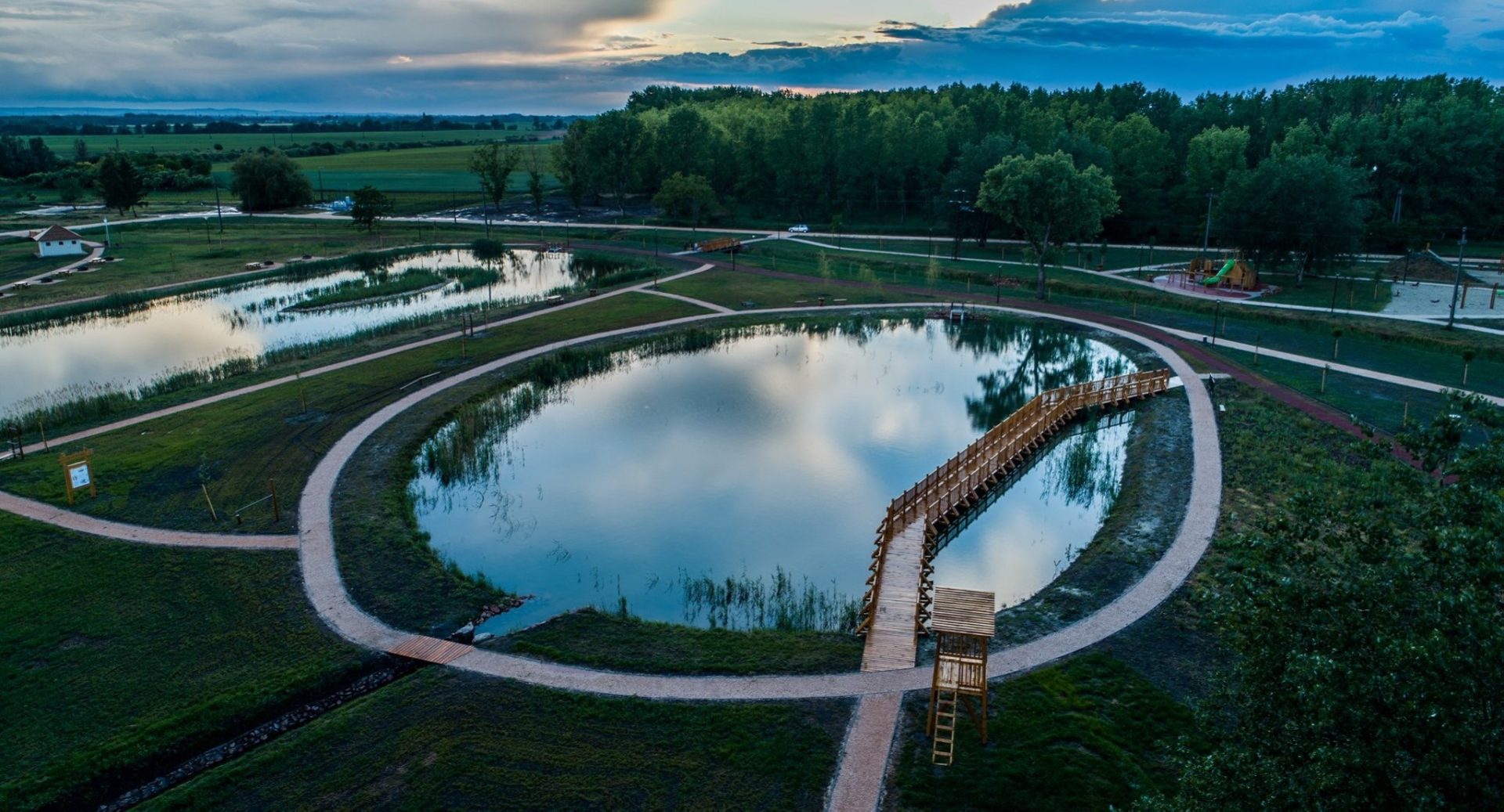


The development of the Akasztó fish farm demonstrates how a traditional fish farm can become a true example of modern, sustainable aquaculture.
An EU-funded project supported the improvement of fish farming efficiency, the modernization of production processes, and the long-term sustainability of the farm’s operations in Akasztó. The investment strengthens the farm’s competitiveness while also addressing environmental challenges.
One key element of the development was the modernization of feeding and storage infrastructure. As part of the project, two new storage facilities were built: one ensures the safe storage of feed, while the other is used for feed preparation. Newly acquired processing equipment makes it possible to produce protein-rich feed mixtures, supporting the healthy growth of fish stocks and increasing production yields.
To reduce damage caused by birds, a specialized net system was installed across more than 50 hectares of ponds. The system effectively protects the ponds from cormorants while still allowing boat access between the ponds.
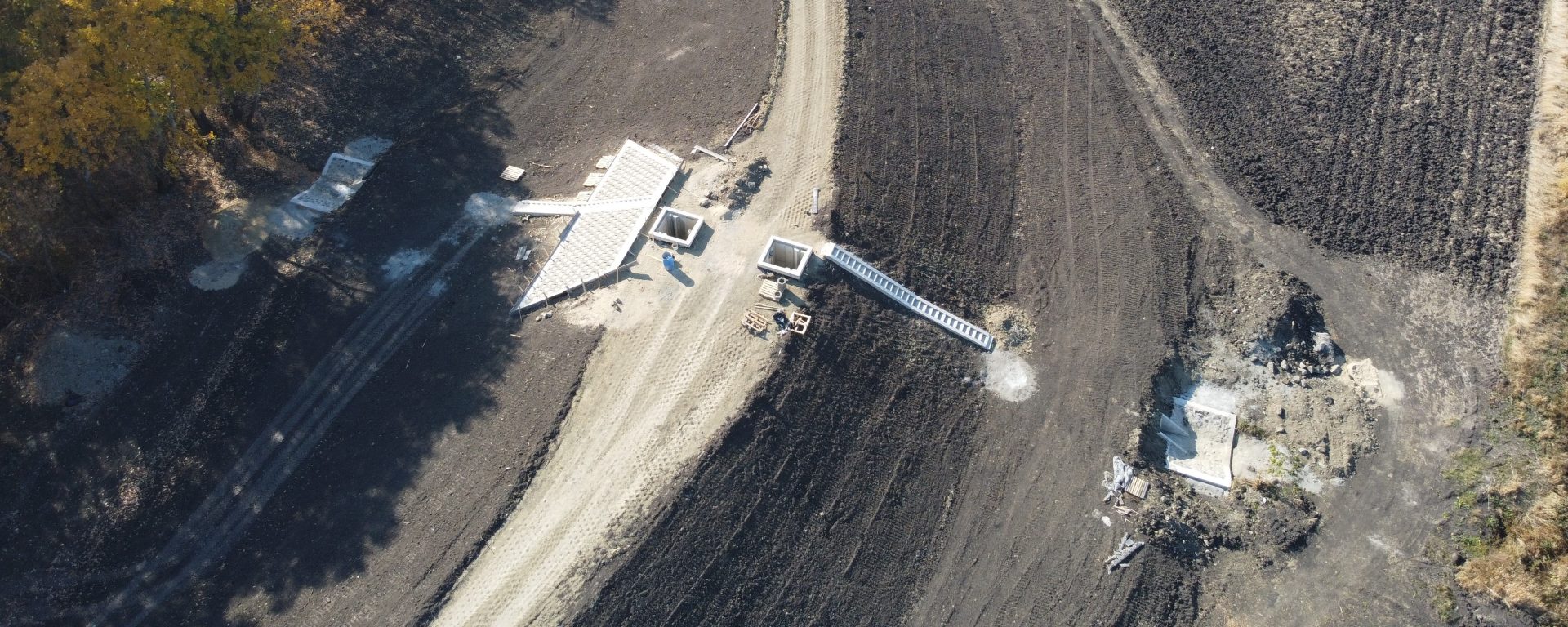
The developments also brought significant improvements to fishing operations and logistics. The acquisition of modern machinery and equipment—including a tractor, loader, and pumps—helps make daily work more efficient. In addition, the reconstruction of dikes and access roads around the ponds has made fishing and transportation safer.
The investment also supported the strengthening of nature-based fish farming practices. The development of grass carp production based on green fodder, the procurement of equipment needed for pond management, and improvements in water management all contribute to a more efficient and sustainable operation.
The development was implemented from EU funding in the project MAHOP-2.2.1-2016-2017-00045 under the Hungarian Fisheries Operational Programme.
Find out more about the project in the Project Finder:Details