

For centuries, the Tisza River has shaped its surrounding landscape. Over the past 150 years, however, large-scale river regulation has brought about profound changes. As the riverbed deepened, floodplain areas were inundated less frequently, significantly altering the character of the landscape and reducing the chances of survival for many species. An EU-funded habitat management and restoration project implemented in the Mártély Landscape Protection Area set out to address these challenges in a comprehensive way, while simultaneously integrating the objectives of nature conservation, flood protection, and sustainable forest management.
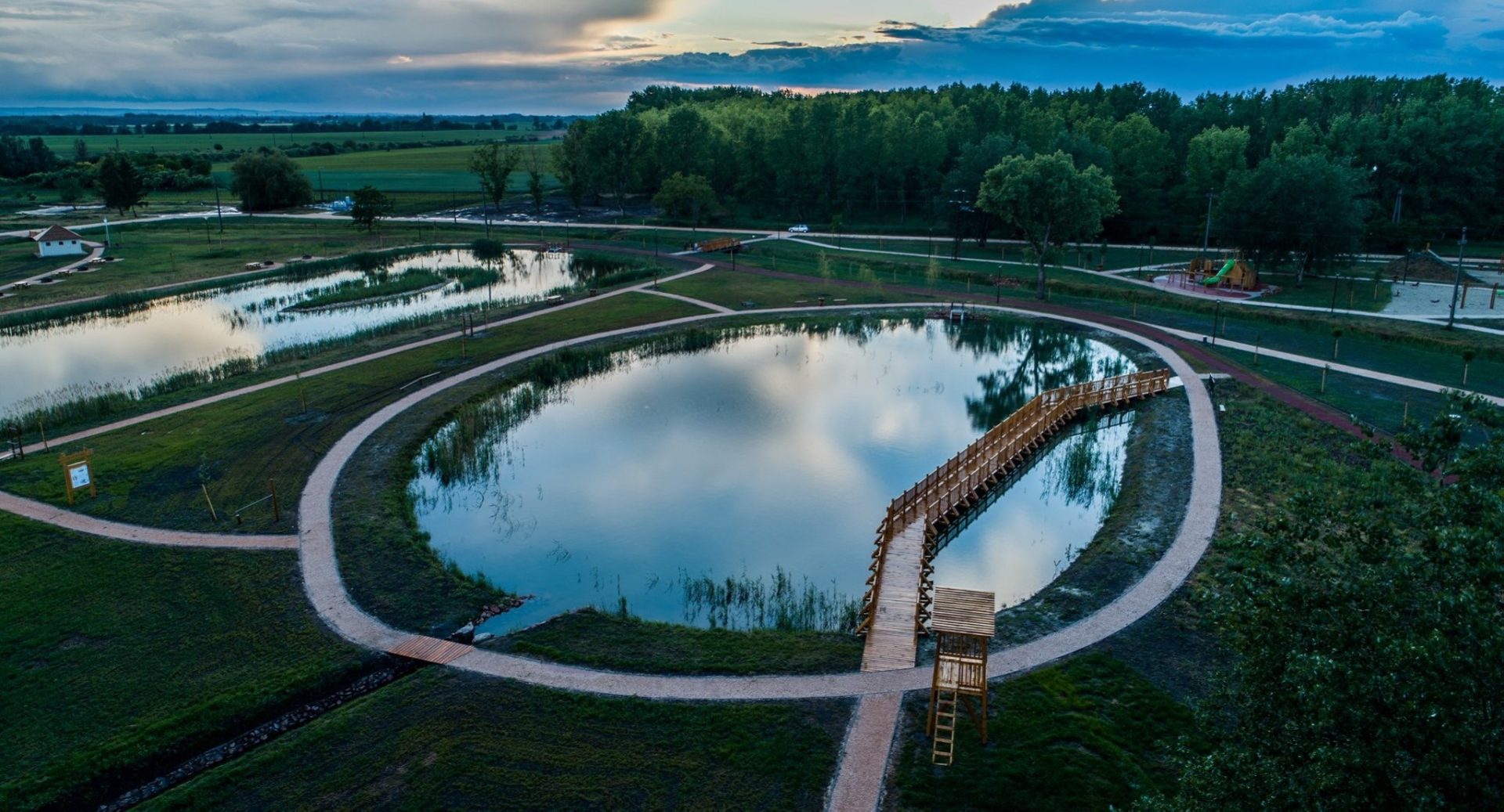
The Mártély Landscape Protection Area, located in the active floodplain on the left bank of the Tisza in the Tiszántúl region, was the third area in Hungary to receive protected status of this kind. Water dynamics play a decisive role in determining both the condition of the area and the richness of its wildlife. The core objective of the project was to ensure that water could reach the floodplain’s network of channels and basins in a controlled manner and over extended periods of time, independently of the Tisza’s fluctuating water levels. To achieve this, the Körtvélyes oxbow lake was supplied continuously with a low volume of water containing little suspended sediment, except during the hottest summer months. This approach proved both cost-effective and environmentally gentle, as it created stable hydrological conditions to which local ecosystems were able to adapt over the long term.
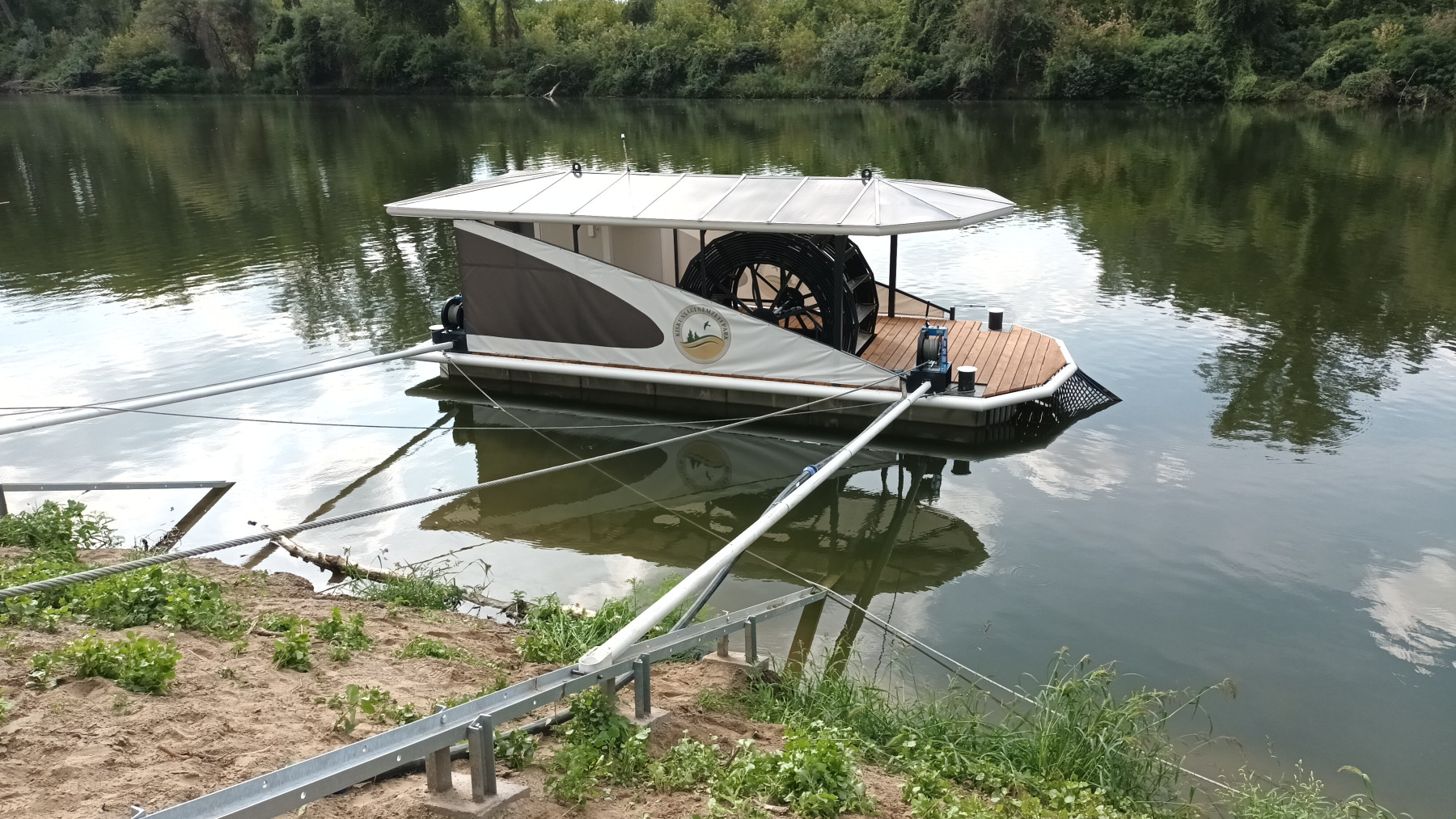
The central technical feature of the habitat revitalisation was a modern floating watermill—also known as a pump mill—installed on the Tisza. This floating structure harnesses the river’s renewable mechanical energy, and alternatively wind energy, to drive a low-capacity pump. As a result, water supply to lower-lying areas can be maintained even during drier periods. The energy required to operate the system’s safety and electronic components is provided by solar panels mounted on the top of the structure, enabling the entire system to function without external power input and relying exclusively on renewable energy sources.
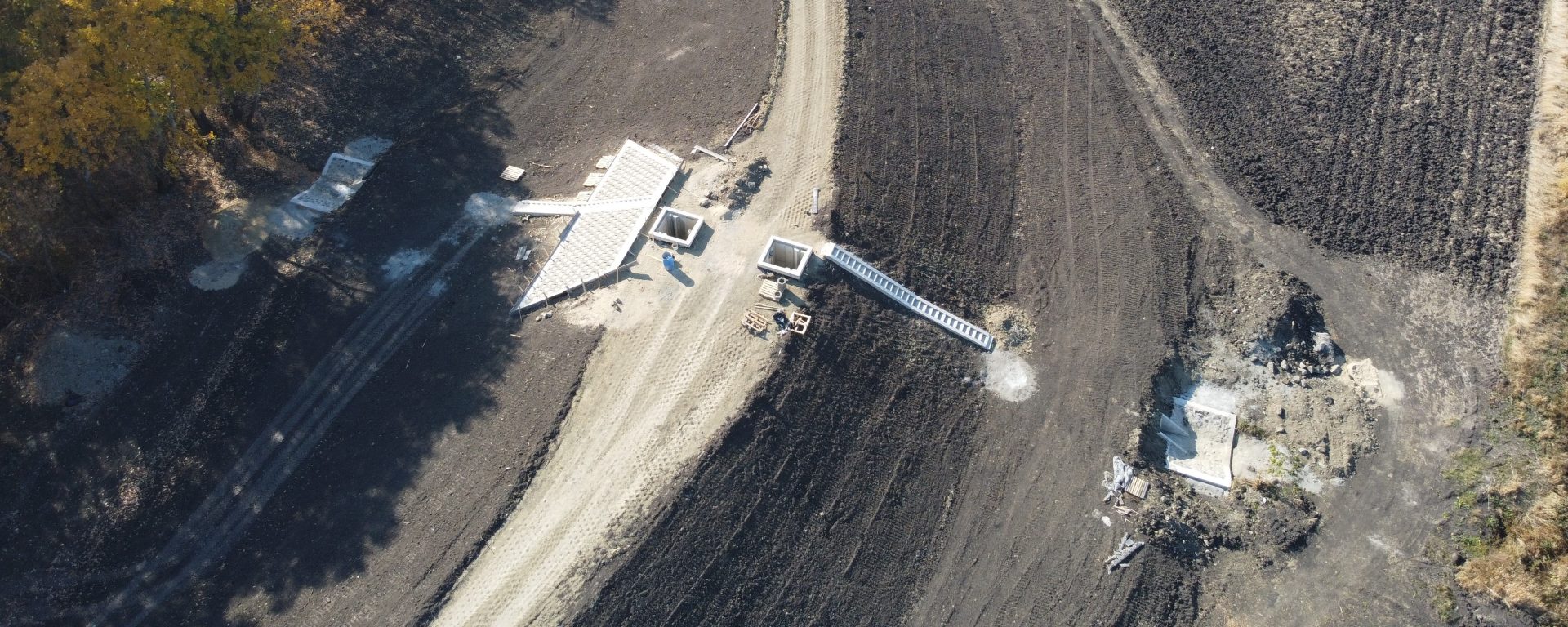
The sediment-poor water lifted by the watermill continuously replenishes the elements of the Körtvélyes habitat system, including the oxbow lake, Lake Horgas, the Sebes and Csala channels, as well as shallow wetlands and former material extraction pits—known locally as kubiks—created during embankment construction in earlier river regulation works. The installed, adjustable control structures, consisting of simple gated sluices, allow floodplain water levels to be regulated with precision, while also taking into account the interests of local land users. Excess water is returned to the Tisza via the Tűfark channel, ensuring the effective operation of the floodwater conveyance corridor. Through the one-time construction of channels directly connected to the oxbow lake and the reconstruction of the Tűfark structure, not only the oxbow itself but also the associated remnants of an ancient water system have been restored to full functionality.
The more stable and predictable water supply has led to a marked improvement in living conditions for several Natura 2000 indicator species. Habitat conditions have become more favourable for the European pond turtle, the weatherfish, and the spined loach; feeding areas available to otters have expanded; and nesting and foraging opportunities have improved for a range of water-dependent bird species, including the black-crowned night heron, the little egret, the corncrake, and the short-eared owl.
The project carried out in the Mártély Landscape Protection Area clearly demonstrates that nature conservation goals can be successfully aligned with technical innovation and close cooperation among stakeholders. Water has returned to the floodplain in a controlled and predictable way, creating improved ecological conditions for wildlife along the Tisza.
Beyond its local importance, the intervention represents a forward-looking approach that may serve as a model for future floodplain management—harnessing the forces of nature in order to protect nature itself.
The development was implemented from EU funding in the project KEHOP-4.1.0-15-2016-00070 under the Environmental and Energy Efficiency Operational Programme.
Find out more about the project in the Project Finder:Details