
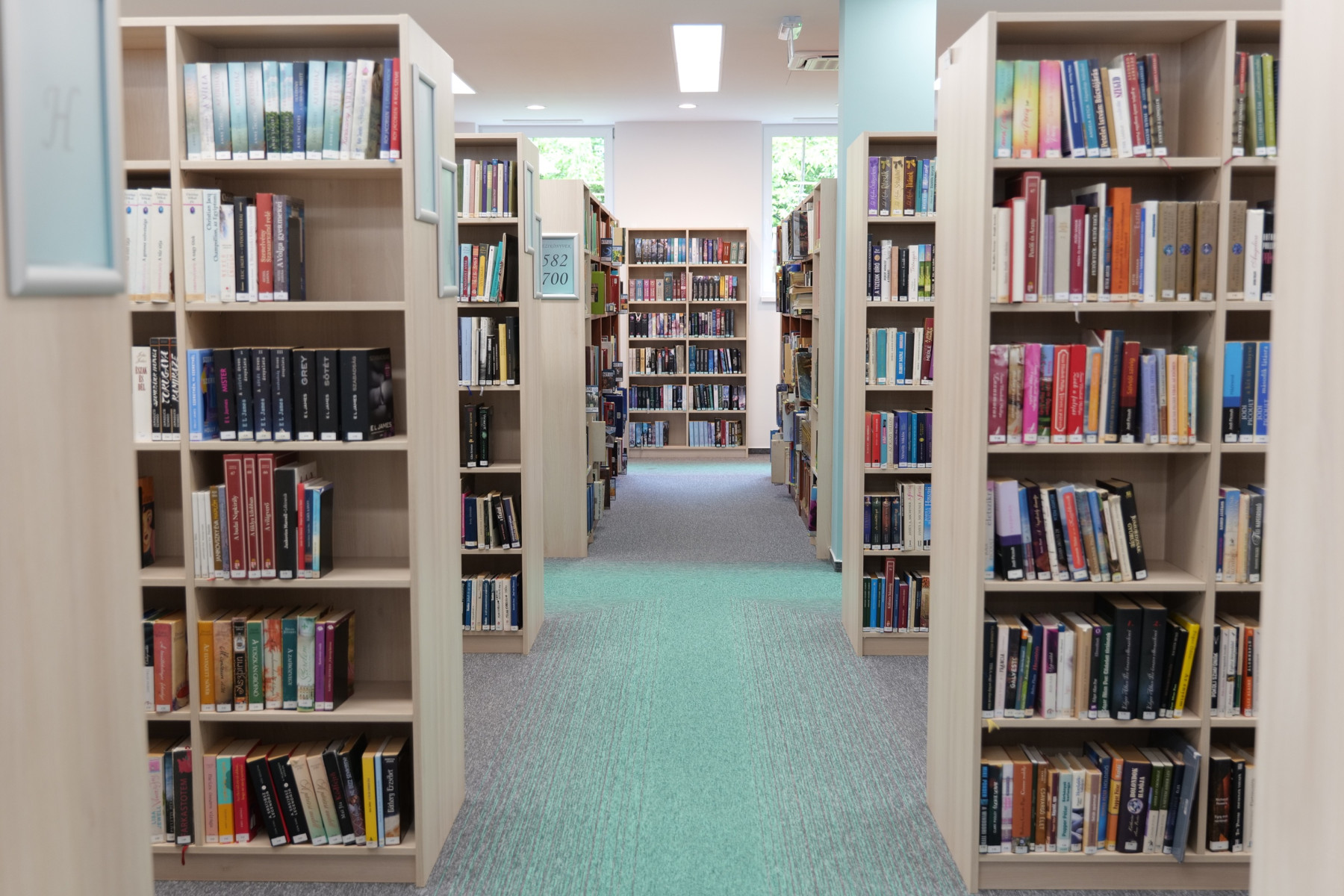
Visiting a library can still be a deeply meaningful experience today. It offers a calm refuge that feels genuinely liberating amid our overstimulated, notification-driven, algorithm-controlled daily lives. In a library, people are not led by “personalized recommendations” but are free to wander—both among the shelves and within the worlds shaped by their own thoughts.
At the same time, the modern library is far more than a collection of books. It is an inviting community space, a place to study, a home for clubs and interest groups, and even a digital gateway to the wider world for those who might otherwise lack access. The library’s message remains simple yet powerful: knowledge is a public good, and making it accessible to as many people as possible serves the common good.
This philosophy guided Tata’s library development project, implemented a few years ago with European Union support by the Municipality of Tata. The project aligned with a broader vision of transforming libraries into active, attractive, and up-to-date spaces for lifelong learning, with a strong focus on informal and non-formal learning, digital skills development, and equal access.
Most of the funding was used to purchase IT equipment, new furniture, and to create a so-called Relax Room. More than 300 ICT devices were acquired, enabling digital learning, access to online content, and the comfortable use of visitors’ own laptops and tablets. Outdated furniture was replaced with modern, functional fittings, and the spaces were arranged to support both individual study and community activities. The Relax Room has become a key venue for informal learning. The project also introduced a range of board games, which have proven popular for fostering logical thinking, cooperation, and—above all—shared enjoyment.
One of the project’s targets was to involve at least 300 participants annually in informal learning programs, a goal that was successfully met.
Since then, the library has moved to a new building, where the IT equipment, learning spaces, community areas, and board games remain fully available.
Overall, the development in Tata has contributed significantly to the vision of the 21st-century library as a “living institution”—one that adapts to changing needs while preserving its core mission of freely and humanely sharing knowledge.
The development was implemented from EU funding in the project EFOP-4.1.8-16-2017-00080 under the Human Resource Development Operational Programme.
Find out more about the project in the Project Finder:Details