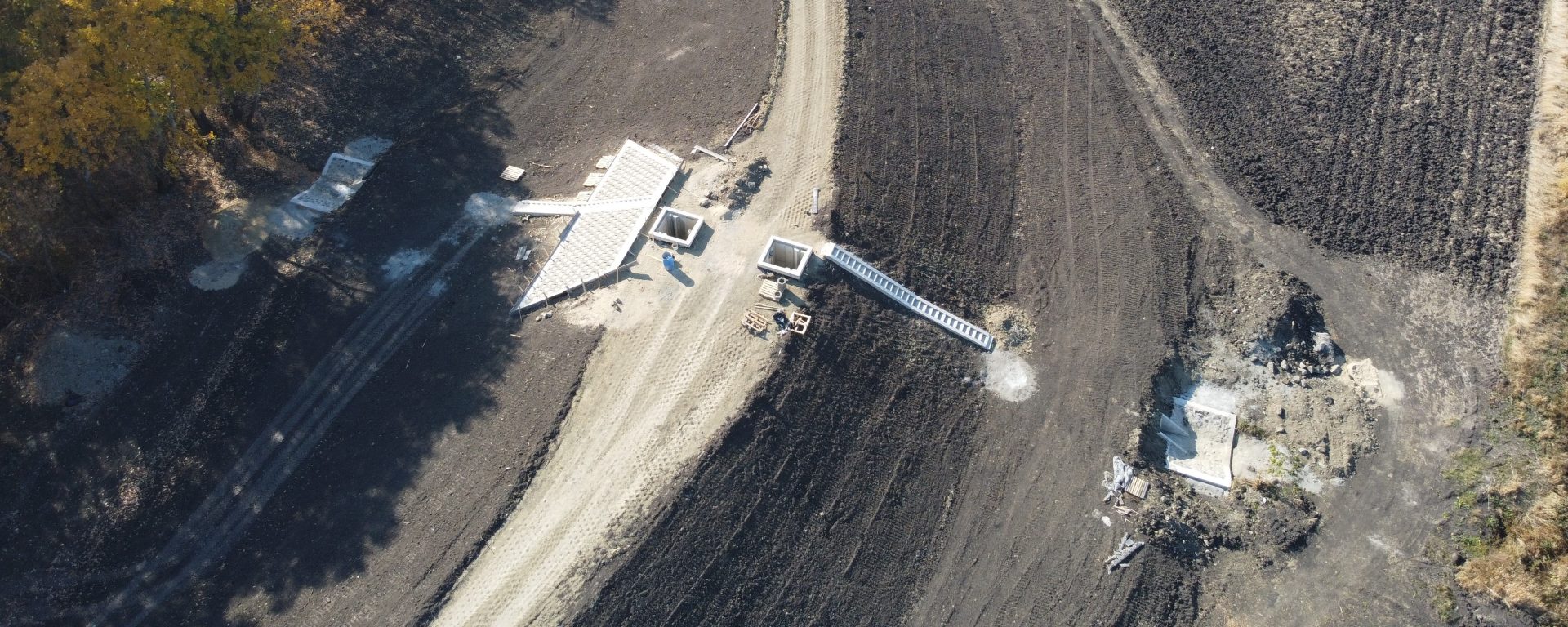


The Municipality of Dunakeszi has built a new nursery in a part of the city where no such institution previously existed, despite strong local demand. A modern nursery with four group rooms was constructed on an empty plot, and a new kindergarten was also built next to it.
Lili is two years old. At the playground she often heard from her little friends that they attend nursery, and now one has finally opened nearby, so she can go as well — something she has been eagerly waiting for.
The population of Dunakeszi has grown dynamically in recent years, with a high proportion of young families. Demographic trends clearly confirmed what residents had already been experiencing: the city faced a severe shortage of nursery places. The number of children under the age of three exceeded 2,300, while municipal nurseries together provided only 182 places. Due to the high fees charged by private institutions, childcare remained unaffordable for many families, prompting the municipality to establish a new facility. The investment was also necessary because large areas of the town were located far from existing institutions. Daytime care for the youngest children is important not only for their well-being but also for supporting parents — especially mothers — in returning to the labour market and strengthening equal opportunities. In line with these objectives, the project was supported by the European Union.
In the morning, Lili’s father takes her to the nursery. The welcoming buildings, decorated with colourful signs and cheerful inscriptions, can be seen from afar. They could arrive by car — there are plenty of parking spaces — but they usually come by bicycle, parking it in the same place every day.
Parking spaces, including an accessible space, as well as bicycle storage facilities were created along the main entrance to the site. The carefully selected location helps reduce urban traffic congestion and brings childcare services closer to newly developed residential areas.
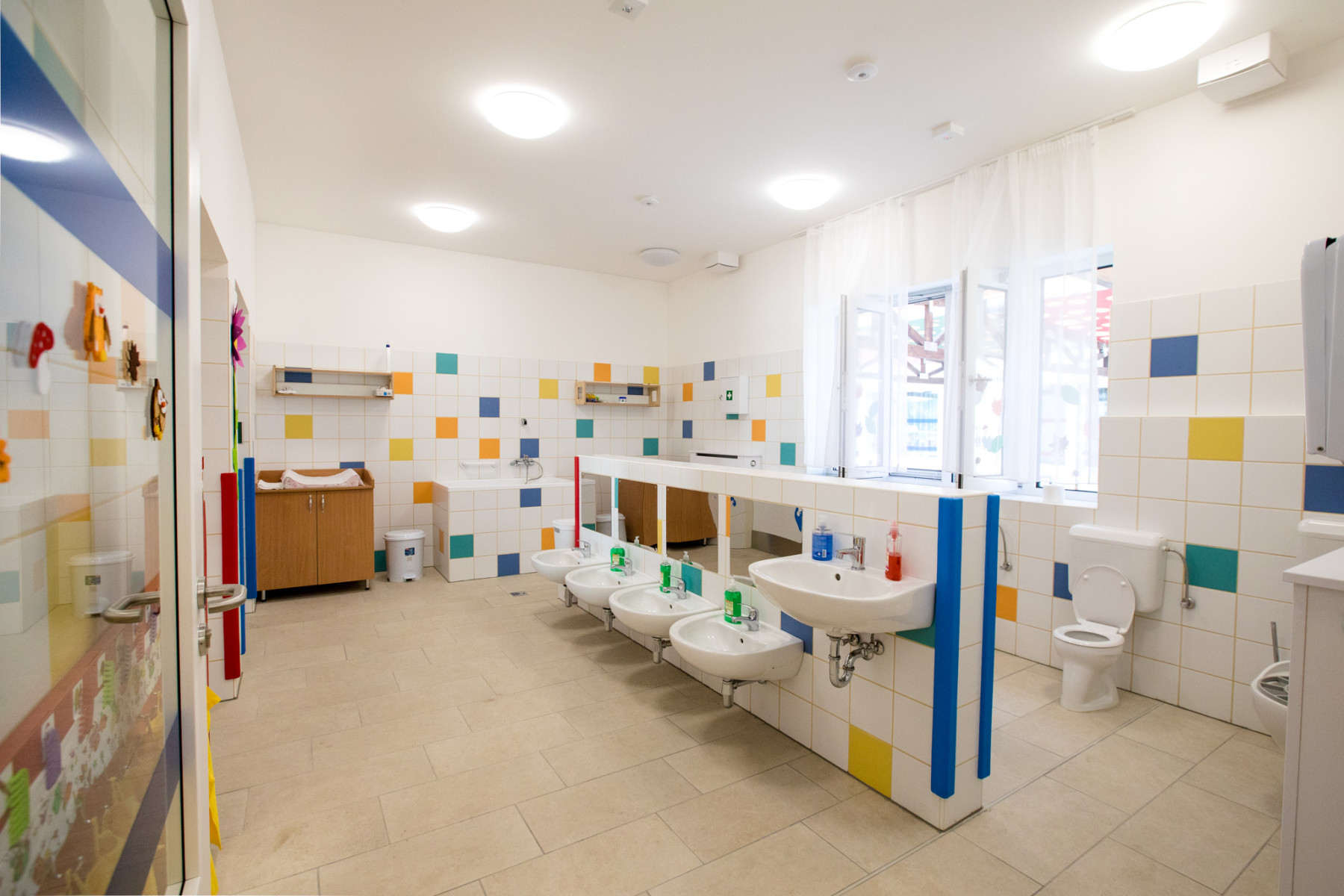
They first enter the changing room. Lili now takes off her coat and shoes on her own and would already run inside when she hears the cheerful buzz of the other children. After a quick hand wash in the brightly tiled washroom, it is time to head to the group room — Lili belongs to the “Ladybird” group.
The new Napsugár Nursery was built with four bright, modernly equipped group rooms, originally designed to accommodate 48 children. The layout of the care and education wings ensures calm, safe everyday operation, allowing special attention to be given to the integration of children with special educational needs and disadvantaged backgrounds. Changing rooms, washrooms and toy storage areas are directly connected to the group rooms.
After breakfast, the children go outside to play in the garden. Lili loves the slides and the toy train, but her favourite is the small playhouse with the green fence, where she enjoys chatting with the others.
The nursery garden functions as a natural extension of the indoor spaces. Lawned areas, covered terraces and various play zones support both active and creative play. Play equipment with impact-absorbing surfaces, sandpits, paddling areas and shaded resting spots all contribute to children’s safety and comfort.
Playing indoors in the group room is just as enjoyable: there are many interesting toys, many friends, and caring nursery staff. After lunch, Lili is already looking forward to her nap. The beds are comfortable, and the rooms are always pleasantly warm.
In line with sustainability considerations, a small solar power plant was installed, contributing to the energy-efficient operation of the institution. The building is fully accessible, and infocommunication solutions also support safe and convenient use. All required service facilities are available in compliance with regulations and arranged in a functional layout: the service wing includes a warming kitchen, laundry facilities, storage rooms, offices, staff changing rooms and a boiler room, with a separate service entrance. The building also features a multifunctional hall, a parent-and-baby room, and a parent reception area designed for events, meetings and community activities.
At the end of the day, Lili heads home with her mother, carrying her favourite doll — one she takes great care of and sometimes wonders about, imagining that one day she too will take it to nursery.
As part of the project, a completely new institution was created with 48 childcare places and ten new jobs, reducing the number of children without access to services and helping to decrease territorial inequalities within the city. Since then, with the help of additional grant funding, the Napsugár Nursery has been further expanded, doubling its capacity and enabling the provision of care for children with special educational needs, thereby strengthening Dunakeszi’s childcare system and supporting greater participation in the local labour market.
The development was implemented from EU funding in the project VEKOP-6.1.1-15-PT1-2016-00059 under the Competitive Central Hungary Operational Programme.
Find out more about the project in the Project Finder:Details