
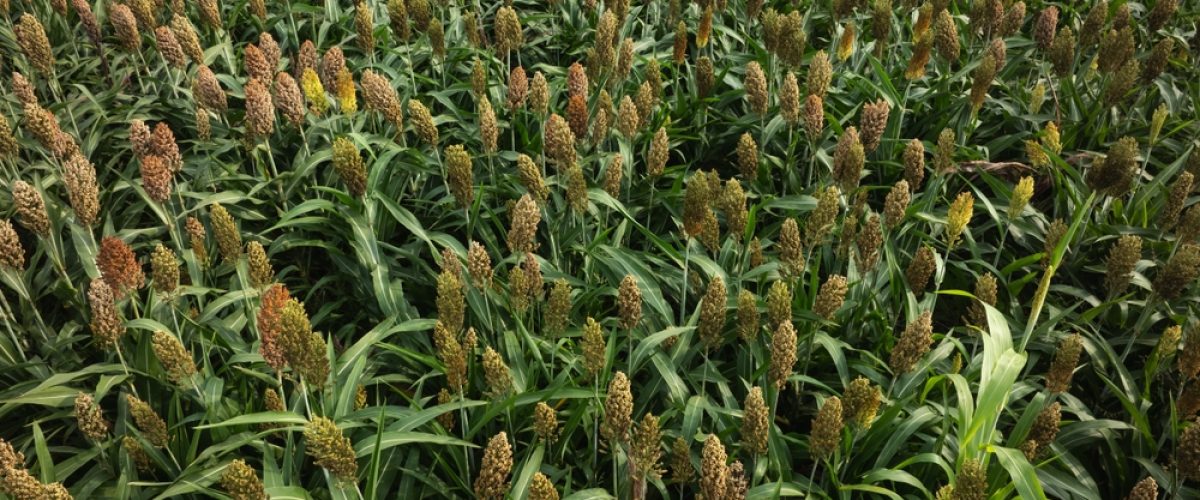
For a long time, sorghum was known mainly as the raw material for making brooms. Today, however, it is becoming an increasingly important forage crop. As weather patterns and natural conditions continue to shift — with more frequent droughts, heatwaves, and shrinking arable land — traditional farming knowledge alone is no longer enough. Successful agriculture now requires continuous innovation, updated expertise, and targeted breeding programs to adapt production to changing conditions.
In this context, Alfaseed Ltd., based in Karcag, Hungary, launched a European Union–funded project aimed at bringing new or significantly improved products, prototypes, and technologies to market.
| Alfaseed has been engaged in research and development since 2005, and since the 2010s has focused primarily on sorghum breeding. Today, 60–65 percent of its research program is dedicated to sorghum, alongside other forage crops. Over the years, the company has built a substantial genetic base and accumulated the professional expertise needed to apply molecular genetic tools and compete at the forefront of modern plant breeding. |
The project centered on developing new sorghum varieties that are drought-tolerant and capable of withstanding large temperature fluctuations and high average daily temperatures. Breeding work combined conventional and biotechnological methods, supported by a treatment protocol tailored to the company’s own portfolio, with precisely defined optimal concentrations and threshold values. Thousands of seeds were examined, and those with the most promising traits were selected. The resulting new lines were tested in large-scale field trials to evaluate their combining ability, followed by the production of trial hybrids. The best candidates were prepared for plant variety protection.
The developments have produced earlier-maturing hybrids with excellent agronomic characteristics, enabling cultivation to expand further north. Sorghum offers multiple advantages: forage hybrids provide strong yields and may allow several harvests per year, while grain hybrids can achieve maize-level yields even under dry conditions. With a protein content of 11–14 percent — higher than that of maize — sorghum can almost entirely replace maize in animal feed. In addition, the newly developed hybrids can be used as biomass in biogas plants, contributing to the growing share of renewable energy sources.
The development was implemented from EU funding in the project GINOP-2.1.1-15-2015-00055 under the Economic Development and Innovation Operational Programme Plus.
Find out more about the project in the Project Finder:Details