

Just a few minutes earlier, the same pair of eyes had been watching the restless ball of fur with suspicion, uncertainty mixed with fear. What was this four-legged creature with its suspiciously large mouth, panting breath, drool and floppy ears going to do? And, more importantly, what was the dog going to do to them? Would it really leave them unharmed? Would it try to take a bite, scratch them or cover them in dirt? But now the tension had disappeared from that wary gaze. The lanky, curly-haired entertainer had flopped down and begun rolling around on the ground in front of them, and when those brown canine eyes seemed to wink encouragingly at the blinking human ones, something changed. A bright smile appeared.
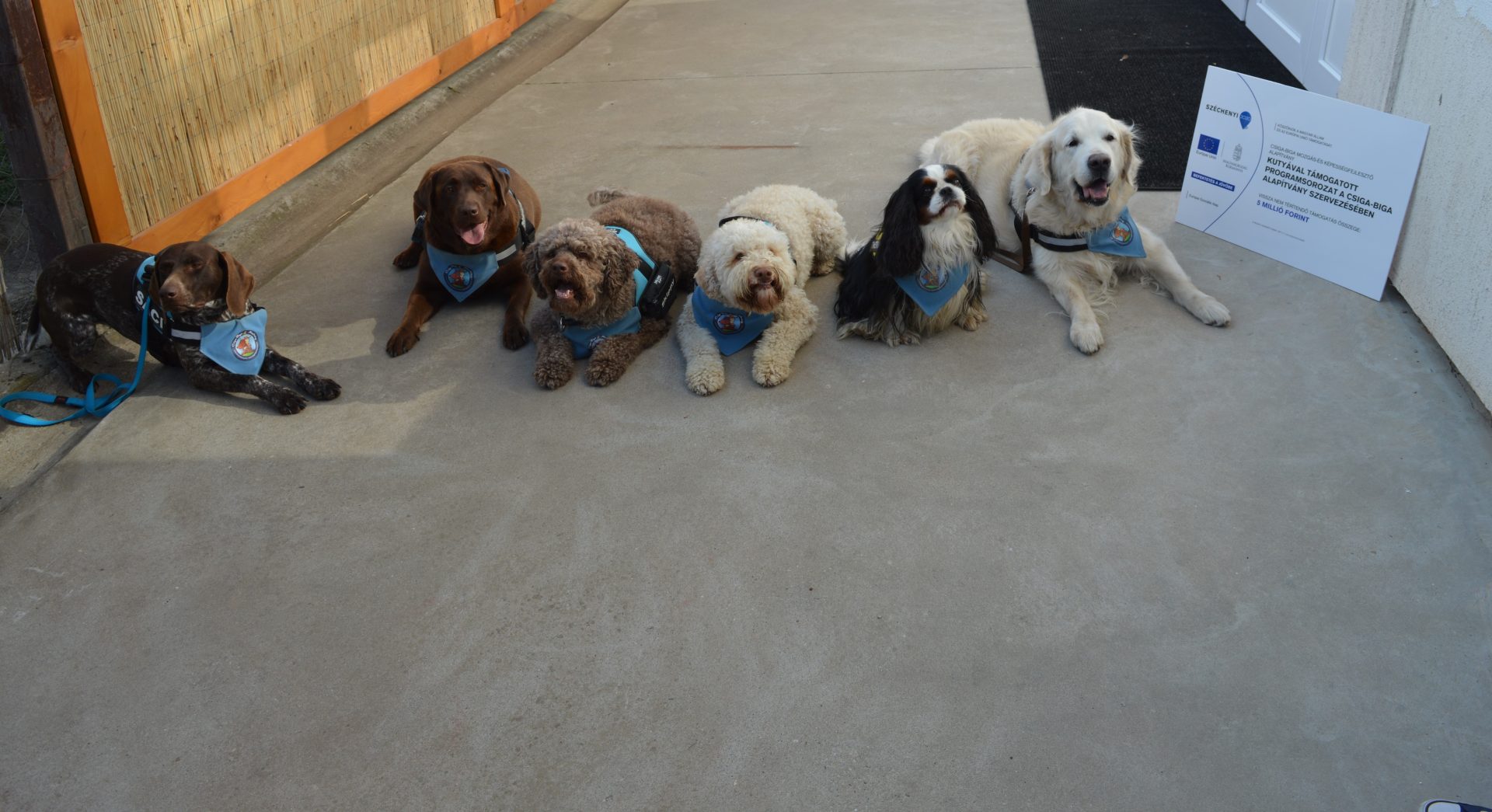
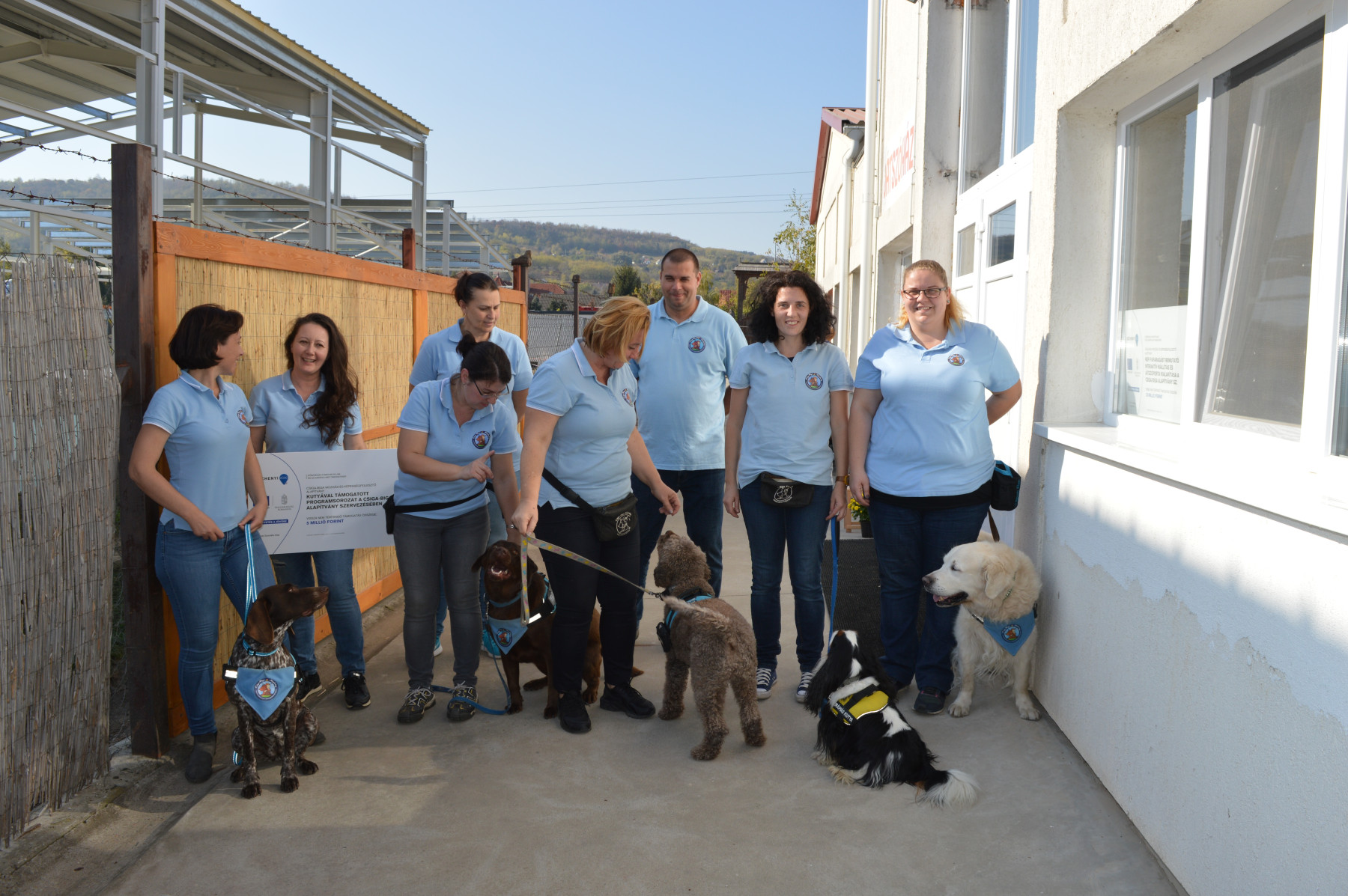
This is exactly what lies at the heart of therapy sessions involving dogs, which are the main focus of the Szekszárd-based Csiga-Biga Mozgás- és Képességfejlesztő Alapítvány. As part of the Széchenyi 2020 programme, the organisation used EU funding to organise a series of events that both showcased the work of a dedicated local civil society organisation with years of experience and offered free opportunities to families who would previously have typically had to pay for the foundation’s services. Along the way, the children grew closer not only to the therapy dogs, but also to many of their peers.
The foundation had already seen on numerous occasions just how strong the demand was in Szekszárd for programmes aimed at children with special needs and disabilities. This time, the funding enabled them to organise a twelve-event programme. The opening and closing events offered full-day activities, while the ten sessions in between focused on a variety of different themes. On each occasion, five groups rotated between activities with the dogs and their handlers, allowing participants to try several different developmental exercises. In a departure from previous practice, the organisers also involved not only the children themselves, but entire families, including parents and grandparents.
Animal-assisted therapy is a special educational method in which children do not experience the sessions as conventional exercises or tasks. The presence of a dog can ease anxiety, increase motivation and create more opportunities for a sense of achievement, often without the children even noticing it. Activities become more playful, and children complete them while focusing primarily on the shared experience with their four-legged companion. With the help of specially trained therapy dogs, the sessions can support the development of fine and gross motor skills, attention, concentration, communication, memory and problem-solving abilities. The method can be particularly beneficial for children with special educational needs, learning or mobility difficulties, autism, speech and communication disorders, hyperactivity or difficulties with social integration.
With funding of just HUF 5 million, the project was small in financial terms, yet it created tangible opportunities for the civil society organisation and showed that the impact of a project can extend far beyond the size of its budget. Dozens of families took part in the sessions, which supported the children’s development while also creating shared experiences for families and strengthening the local community. Through play, conversations, encounters between families and the growing circle of returning participants, the programme also helped create an environment where it became easier to notice one another, accept differences and offer support to those who need it – bringing smiles to faces and building bridges between people.
The development was implemented from EU funding in the project TOP-7.1.1-16-H-ESZA-2019-00490 under the Territorial and Settlement Development Operational Programme.
Find out more about the project in the Project Finder:Details