
Gergő walked cautiously down the hospital corridor, holding his mother’s hand tightly. He could already stand, but movements that had once been natural still felt difficult and tiring. He had been told they were going to a special therapy room, but he was not sure it would be any fun. By the end of the session, however, he was already asking when he could come back.
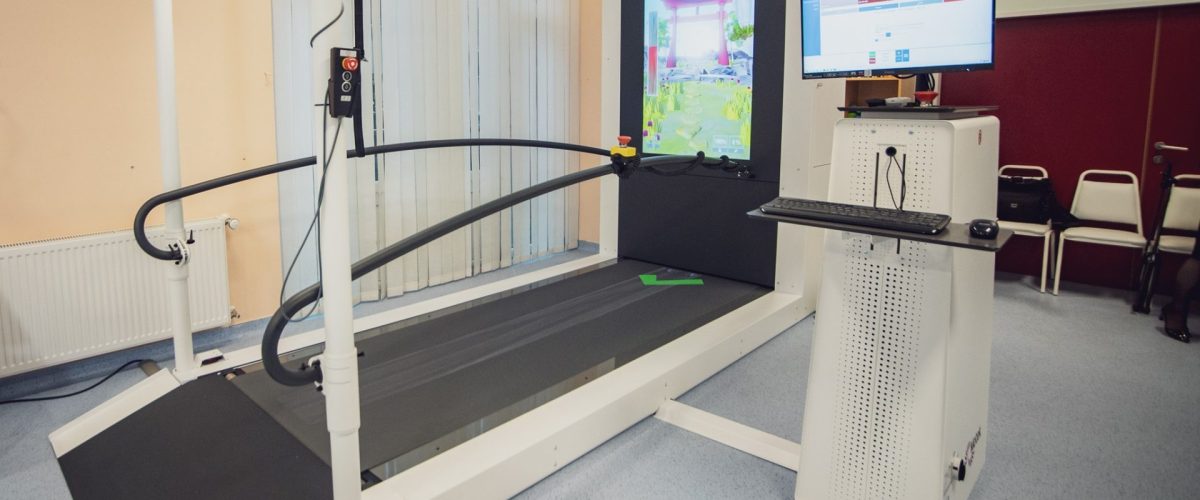
At the rehabilitation unit of the Heim Pál National Paediatric Institute, children are welcomed not only by mats, wall bars and medicine balls, but also by screens, sensors and exciting robotic devices. These tools help them rediscover movement through playful exercises and interactive tasks.
This new experience was made possible by a major EU-supported development project. As part of the project, the Heim Pál National Paediatric Institute introduced several advanced surgical and rehabilitation technologies, some of which had not previously been available in Hungarian healthcare.
The development was based on good practices from international institutions and carried out in cooperation with foreign partners. Its aim was to make modern diagnostic and treatment methods available to children, helping them receive faster, more effective and higher-quality care. The project focused on three main areas.
One of the most visible improvements was the purchase of robotic devices for musculoskeletal rehabilitation. These computer-controlled systems help children practise upper and lower limb movements, standing and walking. The equipment senses the child’s movements, analyses walking rhythm and helps correct movement patterns when needed. It also provides body-weight support and protection against falls.
This technology is especially valuable for children who have lost independent mobility because of neurological injury, paralysis or serious musculoskeletal disease. The exercises are made more engaging with virtual and game-like elements, which help take the child’s attention away from pain, fear and fatigue. They also give children extra motivation to keep practising. In this way, rehabilitation becomes a kind of adventure, where every step and every movement can bring a small but important sense of achievement.
Another key element of the development is the 3D body scanner. The device can create a three-dimensional digital image of even the entire body in just a few seconds, while using an extremely low radiation dose. Compared with a conventional X-ray examination, the radiation exposure may be only one eighth or one tenth as high.
The scanner helps doctors make more accurate diagnoses, plan personalised surgeries and monitor the results of rehabilitation. It is particularly important for growing children, who may need repeated examinations and for whom reducing radiation exposure is especially important.
The third area of the project focused on ear, nose and throat surgery. A modern navigation system, special surgical instruments and digital imaging now support complex procedures for children suffering from complicated chronic middle ear infections. One of these procedures is subtotal petrosectomy, a highly complex operation. The navigation technology gives doctors greater precision and safety, especially when the disease has spread aggressively and traditional surgical solutions are no longer enough.
International cooperation also played an important role in the project. The hospital worked with Italian and Czech partners to bring methods already used successfully abroad into Hungarian paediatric care. This cooperation supported knowledge sharing, the transfer of professional experience and the introduction of new medical approaches.
By the end of the therapy session, Gergő’s movements had become a little more confident. It was a clear sign that expert care, modern technology and, above all, his own determined effort were helping him move closer to recovery.
The new devices cannot replace human attention, professional knowledge or encouragement. But they can make rehabilitation more engaging, easier to follow and more confidence-building for children. In this setting, every small movement shows that another important step has been taken towards better health.
See for yourself in their short film.
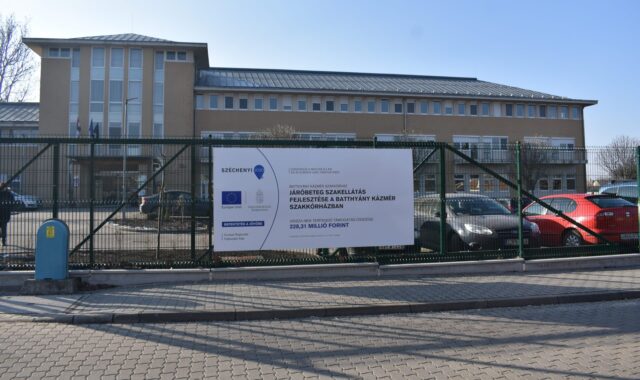
The development was implemented from EU funding in the project EFOP-5.2.6-20-2020-00011under the Human Resource Development Operational Programme.
Find out more about the project in the Project Finder:Details