I was working in the Nevada desert as a paleontology fellow from a well-known East Coast university, carefully brushing dust off rocks. To escape the heat, I stepped into an air-conditioned trailer and started browsing Hungarian websites. That’s when I came across an article about a development in Ajka titled “Exploring the World of Fossils and Minerals.”
As I read it, I felt a sudden wave of emotion. A chill ran down my spine—not from the cool air, but from the memories the article brought back.
It explained that, with support from the European Union, museums have been able to create modern spaces designed for learning. Today, it’s clear that traditional exhibitions alone are not enough to truly engage visitors. Learning becomes more effective and accessible when museums also take on an educational role, supported by the right tools and interactive environments.
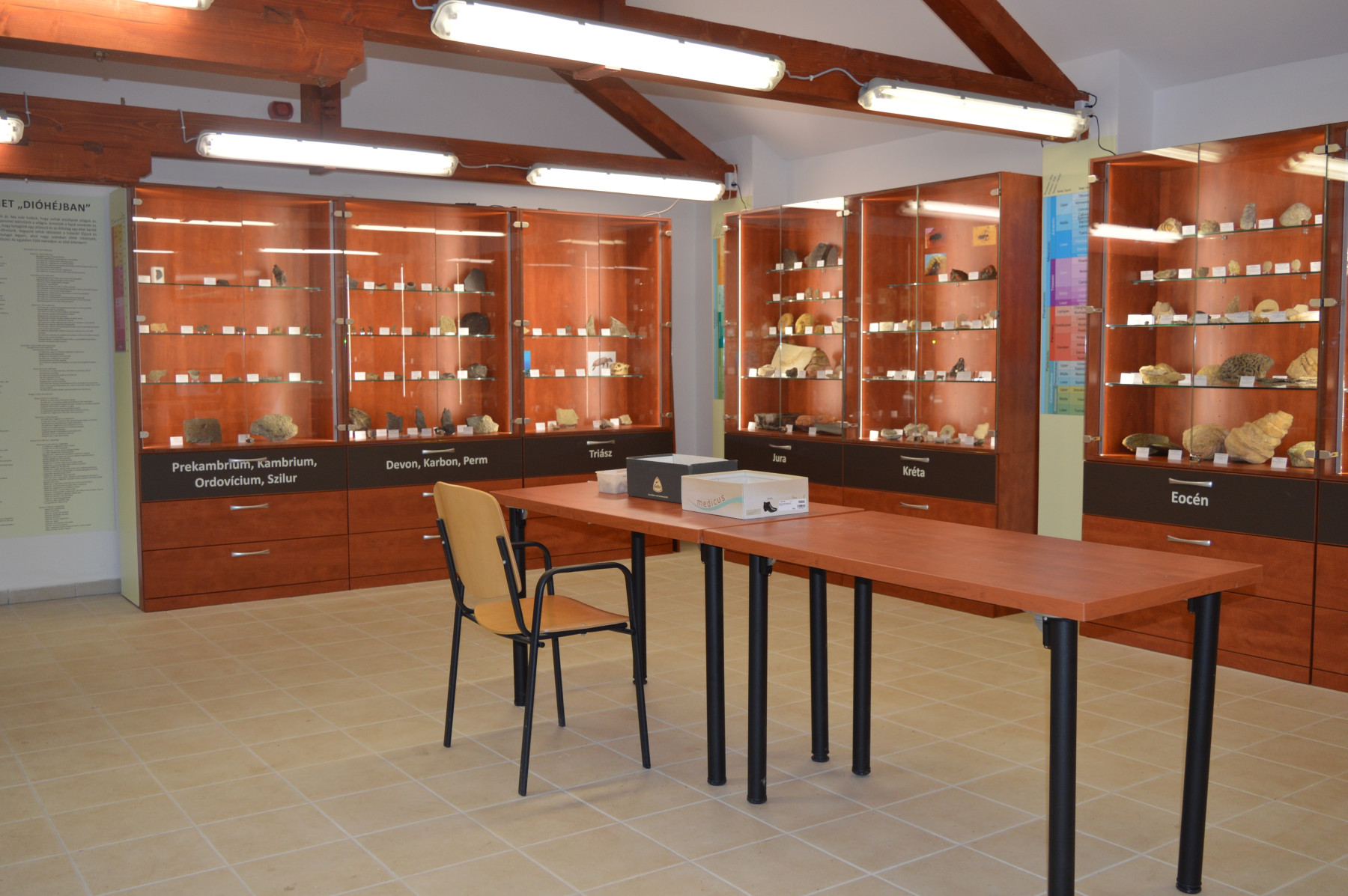
This is exactly what happened in Ajka. At the Mining Museum, a brand-new geological education space was created, combining a visible collection with a hands-on laboratory. Visitors are no longer just observers—they can actively take part in discovery. Using microscopes and interactive tools, they learn through their own experiences.
| The Ajka Mining Museum first opened in 1965, marking 100 years of coal mining in the region, and it has grown ever since. Its open-air exhibition presents the tools, history, and everyday life of mining, including a walk-through tunnel and original machinery. The fossil and mineral collection, with more than a thousand items, showcases different periods of Earth’s history. The museum also preserves the memory of a tragic mining disaster. Recent developments have added modern, interactive learning spaces that are engaging for both children and adults. |
The Kozma Károly Hall has also been renewed, focusing on dinosaurs and ancient life. While the space is now larger, the real improvement lies in the experience it offers. Lifelike reconstructions, digital content, and interactive features—such as a “junior geologist” sandbox—bring the subject to life. Specially designed educational software further supports this engaging, informal way of learning.
The goal of the project was to turn the museum into a true knowledge center, where people of all ages can feel welcome. While the new infrastructure provides the framework, the real value lies in its approach: making learning enjoyable and memorable.
As I finished the article, I leaned back and thought of my childhood. I remembered visiting this very museum in Ajka, holding my miner grandfather’s hand. It was there, among ancient fossils, that I first decided to study Earth’s history.
Now, many years later, the same place has the power to inspire new generations—just as it once inspired me.