

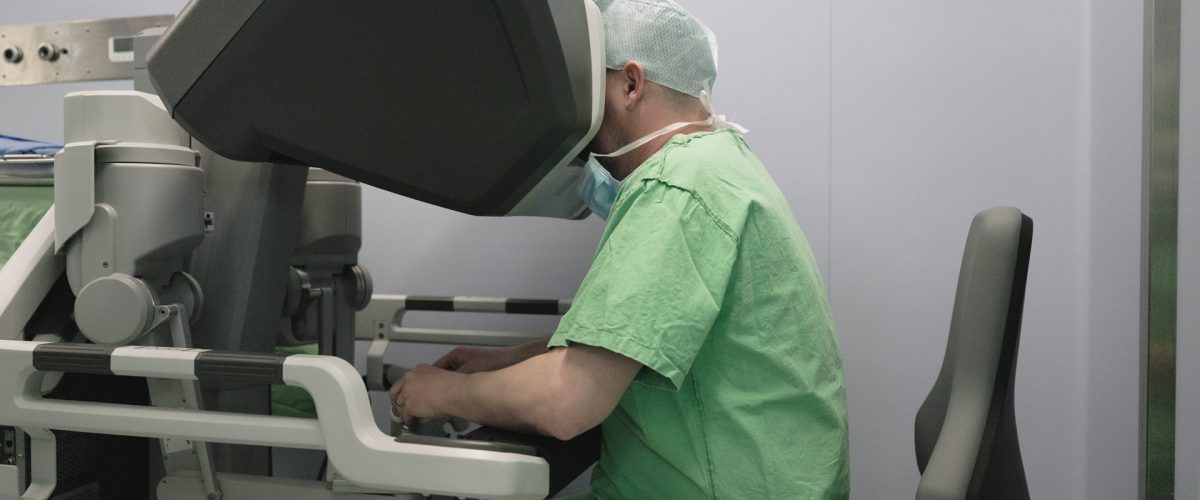
There was a time when a cancer diagnosis almost always meant an uncertain outcome and a long, painful recovery. In recent years, however, advances in surgical technology have opened a new chapter in medicine—and this progress is already making a real difference in everyday patient care in Hungary.
A European Union–funded initiative, led jointly by the National Institute of Oncology and the Jahn Ferenc South Pest Hospital, set out to introduce robot-assisted surgery into the Hungarian healthcare system. While this technology has been widely used in Western countries for years, bringing it to Hungary required more than simply purchasing advanced surgical robots. It also involved close international collaboration to transfer knowledge and expertise, ensuring that local medical teams could use the technology to its full potential.
As part of the program, both institutions introduced robot-assisted laparoscopic surgery. The state-of-the-art Da Vinci systems were first used mainly in urological and gynecological cancer procedures, and later expanded to include abdominal surgeries. Each hospital aims to perform at least 200 robot-assisted operations annually, helping to spread expertise quickly while raising the standard of patient care.
A key element of the project was knowledge transfer. Hungarian surgeons participated in international training programs and study visits, gaining hands-on experience abroad. They then shared this knowledge with colleagues at home, building a strong professional network that supports continuous learning and long-term sustainability.
The benefits of robotic surgery are clear. The Da Vinci system doesn’t replace the surgeon—it enhances their abilities. Using a high-definition, three-dimensional view, surgeons can guide robotic instruments with extraordinary precision. These instruments can perform delicate movements far beyond the capability of the human hand, even in very tight spaces. This level of control is especially valuable in cancer surgery, where removing tumors while preserving as much healthy tissue and organ function as possible is crucial.
Another major advantage is that large incisions are no longer needed. Surgeons operate through just a few small openings, which significantly reduces physical strain on the patient. As a result, recovery is faster, pain is reduced, and hospital stays are shorter. This not only improves the patient experience but also increases the efficiency of the healthcare system by reducing waiting times and making better use of available resources.
Overall, this initiative represents a major step forward in the quality of healthcare in Hungary. It shows that advanced technology is not an end in itself, but a powerful tool to serve people—helping patients recover more quickly, face fewer complications, and return to full, active lives after serious illness.
The development was implemented from EU funding in the project EFOP-5.2.6-20-2020-00014 under the Human Resource Development Operational Programme.
Find out more about the project in the Project Finder:Details